Top 10 Most Underrated Ski Resorts in North America
Skip the megaresorts. These places are better than their reputation and your lift line will prove it.
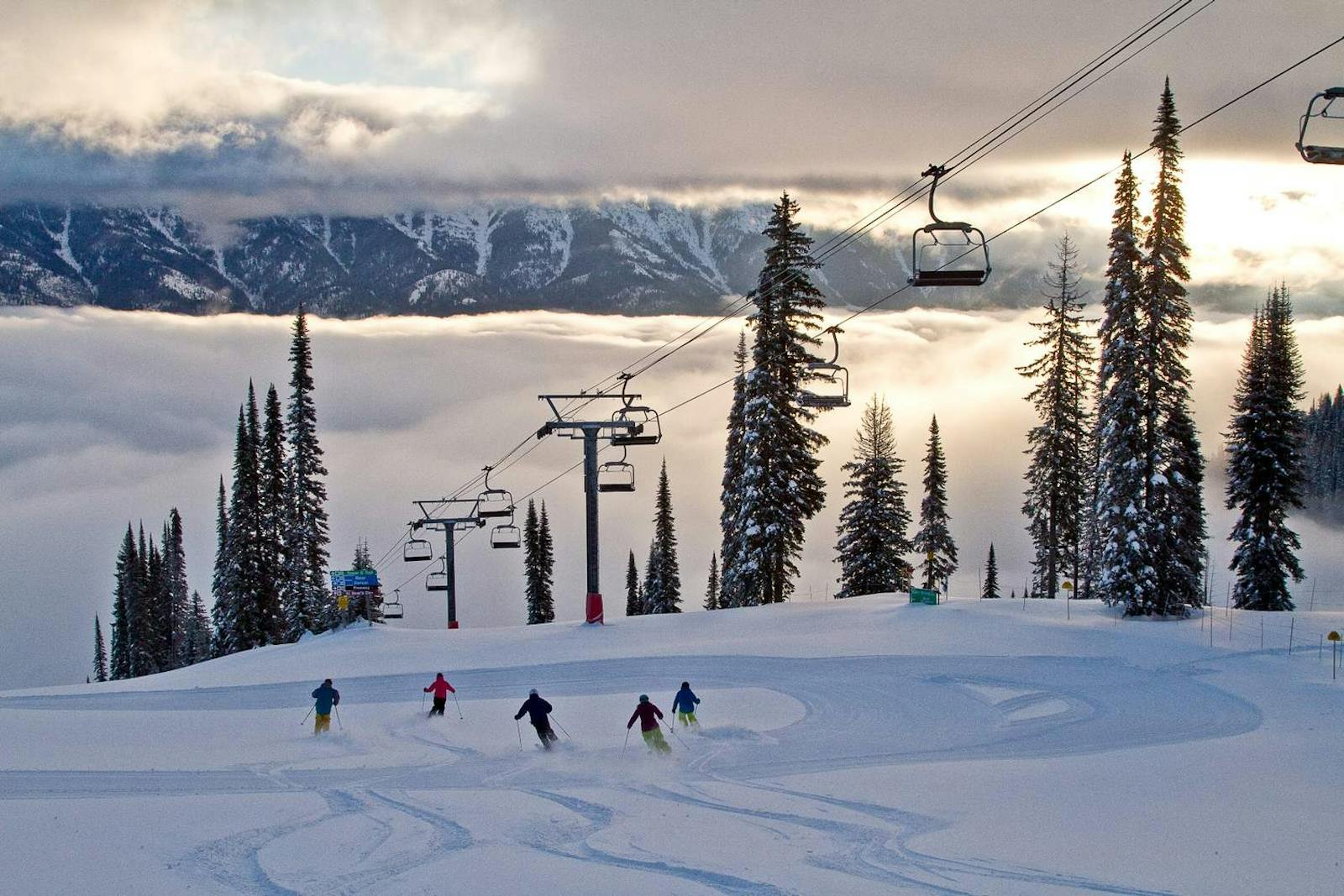
Top 10 Most Underrated Ski Resorts in North America
Category: Resort Rankings | Reading Time: 10 min | Tags: underrated, hidden-gems, resort-guide, value
You know what's overrated? Every resort you see on Instagram. Vail, Whistler, Jackson -- incredible mountains, sure. But you'll spend half your powder day in a lift line with 15,000 other people who also saw the storm forecast.
These 10 resorts don't get the hype. They should. We're almost reluctant to write this because the whole point is that they're NOT crowded. But the data speaks and we can't help ourselves.
1. Grand Targhee, Wyoming -- 500" Average Snowfall
On the west side of the Tetons. Gets the same snow as Jackson Hole (actually MORE -- 500 inches versus 459) but sees a fraction of the crowds. About 300,000 annual visits versus Jackson's 600,000+. The terrain is open bowls and perfectly spaced trees with consistent pitch. Nothing super gnarly, nothing flat.
The vibe is old-school Wyoming. No luxury village. No valet parking. Just stupid amounts of powder and nobody around to track it out. We found untracked runs at 2 PM on a Saturday after a 12-inch dump. At Jackson that snow would be gone by 9:30.
2. Fernie, British Columbia -- 444" Average Snowfall
Southeastern BC. Five alpine bowls stacked next to each other, all above treeline, all collecting snow like it's their job. 444 inches a year. The town of Fernie is a real place -- coal mining history, excellent restaurants, a brewery that doesn't suck. And lift tickets are about CAD $130 versus USD $250+ at major US resorts.
The tree skiing between the bowls is some of the best in Canada. Tight but navigable, steep but not death-defying. And the snow stays cold because the Lizard Range catches continental air, not coastal moisture. Light. Dry. Consistent.
3. Schweitzer, Idaho -- 300" Average Snowfall
Schweitzer overlooks Lake Pend Oreille in the Idaho panhandle and almost nobody outside the Pacific Northwest knows it exists. 2,900 acres -- that's bigger than many "name" resorts. The terrain splits between a groomed front side and an ungroomed backside that gets tracked out approximately never.
300 inches isn't eye-popping but the elevation (6,400 summit) keeps it cold and the lake effect dumps extra snow when conditions align. The real sell is the crowd factor. Or lack thereof. We're talking 5-minute lift lines on peak weekends.
4. Whitewater, British Columbia -- 472" Average Snowfall
Outside Nelson, BC. A local hill that skis like a destination resort. 472 inches a year on 1,984 acres with some of the steepest inbounds terrain in Canada. The Glory Ridge area is legitimate double-black territory.
Whitewater has no base village, no slopeside hotel, no pretension whatsoever. You drive up, you park, you ski incredible snow, you go to Nelson for dinner. Nelson itself is a funky arts town with great restaurants. The whole experience costs about half of what a "real" ski vacation would.
5. Red Mountain, British Columbia -- 300" Average Snowfall
Three mountains -- Red, Granite, and Grey -- connected into 4,200 acres of terrain that almost nobody skis. Located in Rossland, BC, a tiny mining town that's been quietly producing Olympic skiers for decades. The terrain is old-growth forest glades and alpine bowls with virtually zero crowds.
Red's claim to fame is that they barely groom anything. It's a natural-snow, freeride-focused mountain that rewards exploration. If you want to feel like you discovered something, this is it.
6. Silverton Mountain, Colorado -- 400" Average Snowfall
One chairlift. 26,819 acres of permit area. Expert only. No grooming. Guides required on most terrain. This is about as far from a corporate megaresort as you can get in Colorado.
Silverton averages 400 inches on the steepest lift-served terrain in North America. The San Juan Mountains are rugged and the avalanche terrain is no joke -- hence the guides. But if you can handle it, a powder day at Silverton is unlike anything at a traditional resort.
Plus they do heli-skiing for $249 a run. That's the cheapest helicopter-accessed skiing in North America.
7. Castle Mountain, Alberta -- 354" Average Snowfall
Deep in southern Alberta, Castle Mountain gets dumped on by the same storms that hit Fernie, but with even fewer people. The terrain is steep and varied -- 3,592 acres of mostly ungroomed, unapologetically challenging skiing.
Castle has historically been underfunded and that shows in the base facilities. But that's changing, and the mountain itself is world-class. Locals have been hoarding this one for years.
8. Jay Peak, Vermont -- 349" Average Snowfall
Most snow in the East. By a lot. Jay Peak's position near the Canadian border catches nor'easters and lake-effect moisture that miss resorts further south. 349 inches in a region where 150-200 is normal. The glades here rival anything in the Rockies for tight, technical tree skiing.
The Tram rises 2,153 vertical feet and accesses some genuinely steep terrain. And Jay has invested heavily in waterpark and resort amenities that make it a legitimate family destination. It's the total package in a part of the country where most ski areas feel like an afterthought.
9. Kicking Horse, British Columbia -- 295" Average Snowfall
The golden gondola rises 4,133 vertical feet above the town of Golden, BC. Fourth-largest vertical in North America. The upper mountain is bowls and chutes that'd feel at home in Jackson Hole. The lower mountain has some flat spots (we're being honest), but the top two-thirds is exceptional.
Kicking Horse is the kind of place where you look at the terrain map and think "wait, why don't more people talk about this?" The answer is that it's in a less convenient location and the marketing budget is smaller. That's it. The skiing is legitimately elite.
10. Bridger Bowl, Montana -- 350" Average Snowfall
Community-owned nonprofit ski area outside Bozeman. Let that sink in. The Ridge terrain at Bridger is hike-to expert terrain that rivals anything inbounds at major resorts. 2,000 acres, 350 inches of cold Montana powder, and a $75 day ticket.
Seventy-five dollars. At a resort with legitimate expert terrain, consistent snow, and zero corporate overhead. The catch? The base facilities are basic and you won't find a four-star hotel within 20 miles. But if you're reading SnowRadar for restaurant reviews instead of snow data, you're in the wrong place.
The Pattern
Notice anything? Almost all of these are in British Columbia or the northern Rockies. The secret corridor for underrated skiing runs from Idaho through Montana into southeastern BC. The snow is consistent, the terrain is steep, the crowds are tiny, and the costs are reasonable.
The megaresorts are great. We cover them because they matter. But if you want the best actual SKIING experience -- fresh tracks, no crowds, legit terrain -- this list is where you should start.
We just told thousands of people about these places. Sorry, locals. It had to be done.
Related Resorts
Revelstoke Mountain Resort
5,620 feet of vertical. The most of any resort in North America. Not even close.
Alyeska Resort
60 miles from Anchorage, 4,000 feet of vertical, and bears on the golf course in summer.
Lake Louise Ski Resort
Postcard views of a frozen turquoise lake, 4,200 acres of terrain, and grizzlies that outrank the patrollers.
Big White Ski Resort
The Okanagan snowbelt dumps 750cm on a mountain that's somehow still underrated.