The Ski Season Is Over. The Bulldozers Are Winning.
Palisades Tahoe just pushed its village plan into implementation. Nevada's Ruby Mountains are fighting over a private ski area. Construction season is not a side story anymore.
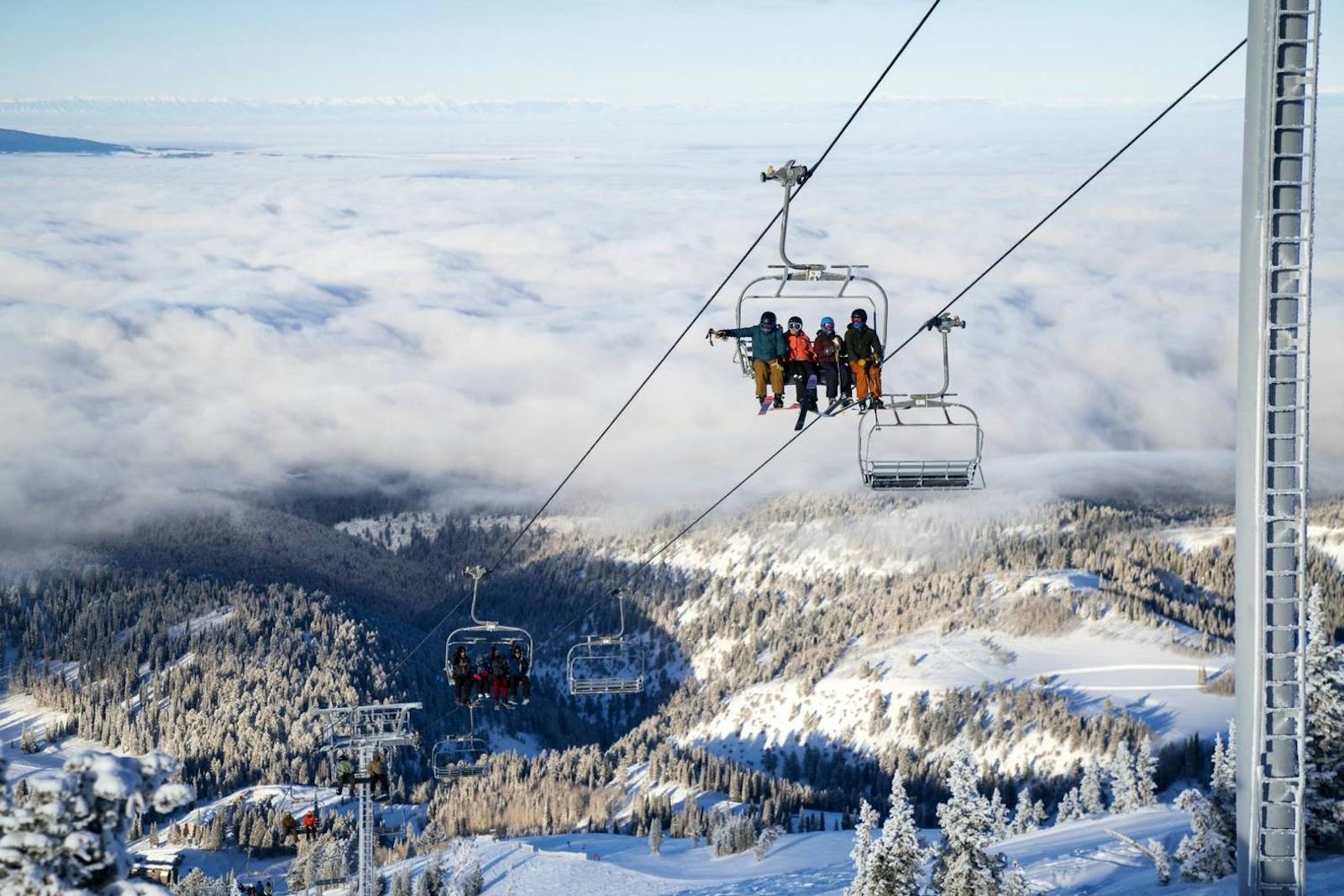
The lifts are mostly quiet. The snow reports have gone from depressing to irrelevant. The few late-season survivors are either on volcano time, glacier time, or "please check our Instagram before driving" time.
So naturally, the biggest ski stories right now are not about skiing.
They are about building.
Placer County just approved amended plans for the Village at Palisades Tahoe, moving one of the longest-running Tahoe development fights into the implementation phase. In Nevada, the Ruby Mountains are still arguing over a private ski area with five lifts, a tiny lodge, and a public-access question that feels bigger than the project itself. Across North America, resorts are announcing lift packages, snowmaking upgrades, base-area redevelopments, and year-round attractions like the 2025-26 winter never happened.
Which is funny, because the 2025-26 winter absolutely happened. It was brutal. Western skier visits got punched in the face. Vail visits fell hard. Snowpack failed in places that normally print March money. Closing dates turned into damage reports.
And now the industry answer is: more capital projects.
That sounds backwards until you look closer. Construction season is not a break from ski season anymore. It is the industry telling us what it thinks ski season is becoming.
Palisades Finally Gets Its Yes
The Palisades Tahoe village saga has been running so long it should probably have its own pass product.
The short version: Placer County approved the original project in 2016. Legal fights followed. The county approved it again in 2024. More litigation followed. In July 2025, Palisades Tahoe reached a settlement with the League to Save Lake Tahoe and Sierra Watch. Now the county has approved amended plans that reflect the settlement and reduce the project scope.
The new numbers matter:
- Hotel and condo bedrooms drop from 1,493 to 896.
- New commercial space in the main village drops from 277,733 square feet to 222,000 square feet.
- The Mountain Adventure Camp shrinks from 90,000 to 72,000 square feet.
- The development timeline is set at 25 years.
- Employee housing is supposed to accommodate 295 employees, with 200 occupied alongside the first building.
This is still a large resort village. It is just no longer the same mega-village that made Tahoe conservation groups want to set their hair on fire.
The county's framing is exactly what you would expect after a decade of conflict: balance, refinement, workforce housing, transportation, creek restoration, public safety. And to be fair, those changes are real. A 40% bedroom reduction is not cosmetic. Moving from court fight to settlement to amended plan is a meaningful shift.
But the bigger thing is this: Palisades is not primarily buying more ski terrain here. It is buying the future shape of Olympic Valley.
That is the off-season story.
Resort development used to be easy to explain to skiers. New lift equals shorter line. New snowmaking equals earlier opening. New trail equals more laps. You could point at the mountain and say, "There. That improves skiing."
Base villages are murkier. They can make a destination work better. They can add beds, restaurants, employee housing, transit pieces, and the kind of walkable density that reduces car chaos if it is done well. They can also turn a ski area into a real-estate machine where the mountain becomes the amenity, not the point.
Palisades is now the test case for whether Tahoe can accept the first version without getting swallowed by the second.
The Ruby Mountains Are the Opposite Story
If Palisades is the giant, public, litigated, everyone-has-a-comment version of ski development, the Ruby Mountains proposal is the small, private, somehow-even-more-symbolic version.
In March, the Elko County Planning Commission approved a conditional use permit for a private ski facility on Ruby Mountain Ranch, owned by Peter Christodoulo. Local reporting described a plan with a lodge, a private home, up to five guest rooms, and future development of up to five chairlifts in the Lamoille area. The land is roughly 2,300 acres in the project area, with steep terrain near National Forest lands.
The Elko Brief reported that eight appeals were filed after the planning commission vote, sending the decision toward county commissioners. The same report says the plan is primarily for family and friends, guest stays would be capped at 28 consecutive days, and the approval conditions include no night skiing and lift removal if the facility goes unused for five straight years.
Read that again: five lifts, five-ish guest rooms, private use.
That is a strange ratio.
The Ruby Mountains have always had this weird ski-area dream aura around them. Big relief. Beautiful terrain. Enough snow to support backcountry skiing and heli-skiing. Also remote, environmentally sensitive, politically complicated, and not exactly sitting next to a major destination airport. Public ski-area plans have come and gone for decades.
Now the version that might actually happen is private.
That is where the story gets spicy. Not because private landowners should be banned from building things on private land. That's too simple. The proposal is not a 2,000-room village. It is not Vail buying Elko County. It is not even trying to be a normal public resort.
The tension is that skiing keeps selling itself as access -- access to mountains, access to winter, access to a sport that already costs too much -- while some of the most interesting new mountain infrastructure points the other direction.
Palisades says: we need more beds, more village, more managed destination capacity.
Ruby says: what if a ski area exists for a tiny circle of people?
Those are different projects. But they rhyme.
Construction Season Has a Pattern
The easy take is "ski resorts are investing again." True, but incomplete.
Look at what is getting built:
- Palisades: lodging, commercial space, employee housing, transportation pieces, creek restoration, and a 25-year village buildout.
- Ruby Mountains: private lift-served access on ranch land.
- Loon: a proposed pulse gondola connecting RiverWalk Resort with South Peak, more town-and-real-estate connector than terrain expansion.
- Sugar Bowl: a $100 million renovation anchored by a new gondola, base improvements, and parking work.
- Deer Valley: a massive new terrain and base-area expansion tied to East Village.
- Mont-Sainte-Anne: a $100 million mountain plan with new lifts, snowmaking, base/summit redevelopment, a mountain coaster, and potential real estate investment.
- Resorts of the Canadian Rockies: four new lifts across Fernie, Kimberley, and Kicking Horse, plus real estate activity in mountain communities.
- Gunstock: $4.5 million in practical lift, snowmaking, trail, and grooming upgrades.
That list is not one story. It is three.
First, destination resorts are trying to control the whole trip. Beds, village design, food-and-beverage spend, employee housing, parking, transit, activities. The lift ticket is only one part of the machine.
Second, mid-sized and independent areas are investing in reliability. Snowmaking pipe, lift drives, old chair replacements, grooming equipment. Less glamorous, more useful.
Third, access itself is fragmenting. Some projects make skiing easier for more people. Some make it easier for lodging guests. Some make it easier for owners. Some make it easier for five guest rooms in Nevada.
That is why "construction season" is now worth covering like its own beat. The bulldozers are telling the truth before the marketing departments do.
The Climate Subtext Is Not Subtle
After a season like 2025-26, every capital project should be read with climate in the background.
Not in the lazy "skiing is dead" way. Skiing is not dead. People are still skiing Beartooth, Timberline, Mammoth, Killington's snow pile, and wherever the next good winter shows up. The sport is stubborn.
But climate risk changes what kind of investment makes sense.
Snowmaking upgrades are no longer boring maintenance. They are survival infrastructure. Higher-capacity lifts are not always about more skiers; sometimes they are about moving skiers through shorter operating windows. Base villages are not just lodging plays; they are year-round revenue hedges. Mountain coasters, bike parks, wedding venues, conference spaces, and summer gondolas are not side hustles. They are portfolio theory with better views.
That makes Palisades especially interesting. Tahoe had a rough season, but Palisades still has altitude, brand power, terrain, Ikon access, and cultural gravity. If any California resort can argue for a destination village as a long-term bet, it is Palisades.
The counterargument is equally obvious: if traffic, housing, wildfire, water, and snow reliability are already stressed, adding more destination capacity is not automatically resilience. It might be leverage.
That is the whole climate-era resort problem. The same investment can be adaptive or extractive depending on execution.
Employee housing? Good. More beds without real transit progress? Bad. Creek restoration? Good. More car trips into Olympic Valley on peak days? Bad. A year-round business model? Rational. Treating summer as an excuse to overbuild fragile mountain towns? Not great.
The details decide which version we get.
What Skiers Should Actually Care About
Most skiers do not read county planning packets. Fair. Life is short.
But skiers should care about what these projects reveal, because they eventually show up in the experience:
Where you can stay. Palisades adding nearly 900 bedrooms changes lodging supply and the feel of Olympic Valley, even if it takes decades.
Who gets access. A private ski area in the Rubies is legally different from a public resort, but culturally it lands in the same conversation as $300 day tickets and $1,300 passes.
How much driving is required. Good village planning can reduce car dependence. Bad village planning creates more traffic with nicer renderings.
Whether workers can live near the mountain. Employee housing is not charity. It is operating infrastructure. A resort that cannot house staff cannot reliably run lifts, restaurants, lessons, patrol, rentals, and childcare.
What happens in bad snow years. Resorts with modern snowmaking, high-elevation terrain, flexible operations, and enough non-ski revenue are better positioned to survive winters like the one we just had.
Whether the mountain still feels like the point. This is subjective, but not soft. Ski areas lose something when skiing becomes the decorative excuse for real estate.
That last one is the hardest to measure, and probably the most important.
The SnowRadar Take
I do not think the answer is "stop building." That is nostalgia pretending to be policy.
Ski areas need investment. Old lifts need replacement. Snowmaking systems need modernization. Worker housing is overdue everywhere. Base areas that were designed around 1970s parking logic need help. Some villages really do make mountain towns function better.
But after this winter, every project deserves a sharper question:
Does this make skiing more durable, more accessible, and more honest?
Or does it just make mountain real estate more expensive?
Palisades has a chance to prove that a big destination project can be scaled down, legally settled, and tied to real community benefits. That is the generous read.
Ruby Mountain Ranch has a chance to prove that a private facility can stay low-impact and not become a precedent for locking up the best terrain behind wealth. That is the generous read there, too.
But skiers are allowed to be skeptical. We just watched a season where weather exposed every weak point in the business. Now, before the next winter has even started, the industry is showing us its answers: villages, lifts, snowmaking, summer attractions, private access, more beds, more connectors, more capital.
Some of that is necessary.
Some of it is smart.
Some of it is just the bulldozers winning while the snow is gone.
Construction season used to be what happened after skiing.
Now it is where the future of skiing gets decided.
SnowRadar will keep tracking the off-season buildout: Palisades, Ruby Mountains, Sugar Bowl, Deer Valley, Loon, and the less-flashy snowmaking projects that might matter more than all of them when winter gets weird again. For actual snow, keep an eye on the multi-model forecast, Ski This Week, and the prediction markets when storms return.
Related Resorts
Mammoth Mountain
Built on a volcano. Open 'til summer. California's snow magnet.
Red Mountain
7,600-foot summit, $80 lift tickets, zero people who drove here to see and be seen.
Revelstoke Mountain Resort
5,620 feet of vertical. The most of any resort in North America. Not even close.
Alyeska Resort
60 miles from Anchorage, 4,000 feet of vertical, and bears on the golf course in summer.